Facebook Posts
I saw this piece by Daniel Walden on THE POINT a few weeks ago, and am delighted to see it reprinted in THE CHRONICLE OF HIGHER EDUCATION.
You may absolutely disagree with Mr. Walden's political or cultural convictions, but please do read through the whole piece, and see if you resonate with his conclusions. I certainly did--because they have nothing to do with being "left" or "right", and everything to do with being human.
**
...[D]espite our eggheaded reputation, the American left has failed to articulate a broad and unified vision for education. We are generally successful at toeing a line on issues of policy — robust funding for public education, opposition to charter schools, strong support for teachers’ unions, etc. — but the left, having painted a compelling and persuasive picture of a political life that should empower ordinary citizens and of a working life that ought to be a source of pride and dignity, has not been able to make a similar case about what education is for.
As a leftist myself and a university professor, I find this failure particularly galling — especially at a time when the various symptoms of postindustrial capitalism have leeched away the university’s public financial support, pushed students into ever-narrower vocational training for ever more uncertain job prospects, and so inflated tuition rates that a four-year degree can cost as much as a three-bedroom house. What is being offered as education is so far removed from any recognizable articulation of the good life that an alternative is not merely desirable but necessary for education to be considered part of the good life at all.
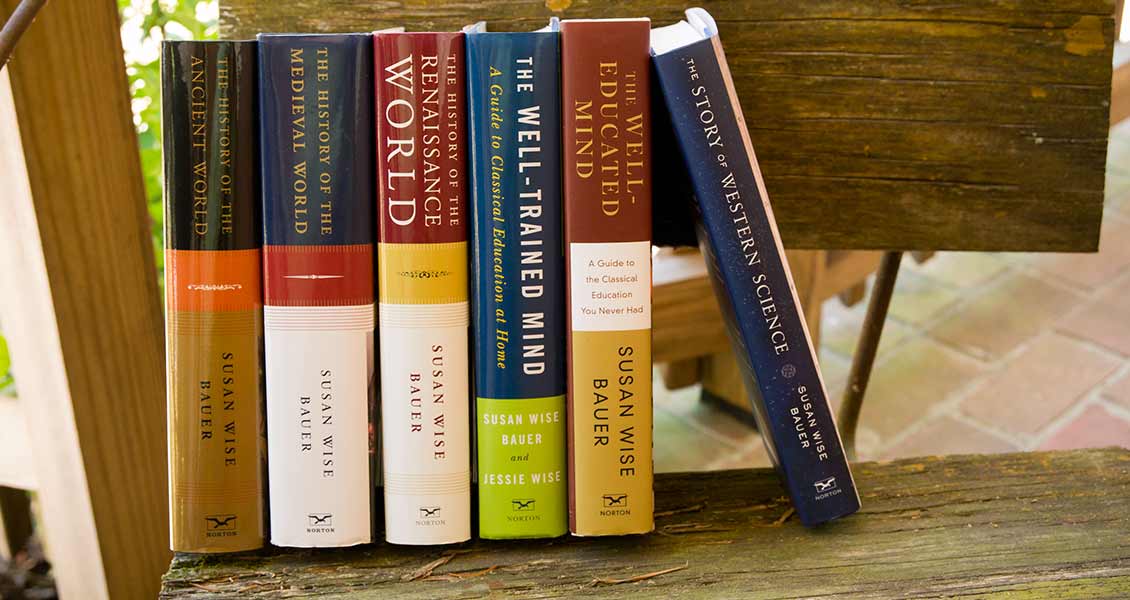
The American right also recognizes that there is a crisis in education — and has responded to it in a variety of ways. The most substantive of these responses generally goes by the name of “classical education,” although the term encompasses a great variety of visions and practices. In some cases it seems to mean nothing more than a preference for old books and discussion-driven teaching; in some it puts a Montessori-like emphasis on creating a beautiful and stimulating learning environment; and in others it decries liberalism, communism, and gender theory as the harbingers of social collapse. The movement’s contemporary shape and name can be traced back to Susan Wise Bauer’s 1999 book The Well-Trained Mind: A Guide to Classical Education at Home. Bauer’s book views the medieval trivium — grammar, logic, and rhetoric — as a framework for moving cyclically through subjects as a child matures: first learning a subject’s basic elements and how they fit together (grammar), then learning argumentation and causality and abstract thinking across various domains (logic), and finally how to make arguments that are elegant and persuasive in addition to being valid (rhetoric). The various practitioners of and advocates for classical education share a commitment to teaching accepted canonical texts (drawing largely on the “Great Books”), to education as inseparable from character formation, and to the thesis that the abandonment of the two prior commitments by K-12 schools and universities has hollowed out their ability to effectively educate students. Many proponents of classical ed draw on the ancient distinction between liberal education, suitable for free persons who are to govern themselves and others, and servile education, suitable for those who are to be useful to others, noting that education in a democratic society ought to prepare all people to lead meaningful lives in pursuit of a vision of the good, not merely to work as someone else’s employee or to serve a particular social function.
Education like this, based on “great books,” has a somewhat unsavory reputation on the left. This is due, in part, to its recent association with conservative or reactionary political movements. It’s also because we do not wish to be elitists or chauvinists. Great-books advocates have been guilty of both; it is all too easy to slip from reading things because they are recognized as good to reading them because they are merely recognized....
Yet the underlying theses of classical education do not strike me as baseless, nor even particularly right-wing. I have always found the distinction between liberal and servile education to be compelling, and the idea that value-free education is desirable or even possible strikes me as absurd on its face. The notion that students should mainly be acquiring “skills” or “competencies,” so prevalent in high-level discussions of education policy and in ranking school systems, rings hollow to anyone who has ever cared enough to become a teacher: One teaches because one has fallen in love and, like any lover, one wants to shout it from the rooftops, because in loving something we come to see that it is good, that it is something a person should want for themselves. We on the left generally agree that education is for the student’s benefit, not for the benefit of their future employer, and that students go to school not merely to acquire skills but to develop an entire social and intellectual life: to have something good and to have it forever. We are sometimes embarrassed to say this, I think, out of misplaced or excessive courtesy: We have seen too many snobs tell people what they ought to like. But we shouldn’t be. It is not snobbish to say that a person with lungs must breathe or that a person with a stomach must eat, nor that a person with a mind must think. It is not snobbish to show someone how to love something new — it is a gift...
We are very far from the world that we on the left would like to live in, the world in which simply living is possible for everyone, and building that world demands difficult work. But it also demands thought, and perhaps we can carve out a little bit of time to think and rehearse for a world in which we can all be more human. If you do not believe that it is possible for someone’s life to be changed by reading and thinking together then I wish you well, but I do not think we are in the same profession and I am not sure we’re on the same side. I can tell you that some years ago now, a young man who was still a convinced atheist read Augustine’s Confessions and found in its pages an account of evil and responsibility that overturned his entire moral picture of the world. That same young man took in Plato and Machiavelli and Hegel and Marx in great gulps the following year and felt like he had fewer and fewer solid places to stand but a much better sense of where he was.
**
www.chronicle.com/article/the-left-wing-case-for-great-books
thepointmag.com/examined-life/the-left-case-for-great-books/ ... See MoreSee Less

The Left Case for Great Books | The Point Magazine
thepointmag.com
A great-books model at the undergraduate level is, in fact, so consonant with Freire’s radical critique that it represents a far better path forward for a left-wing vision of education than virtually anything else currently on offer in the United States.19 hours ago
- Likes: 55
- Shares: 11
- Comments: 5
Thank you for sharing! Very well said. I really hope more and more people across the political spectrum will recognize that education should not only prepare people for job functions. At a minimum, it should prepare competent citizens, participants in civil dialogue, and life-long learners.
Well, that was unexpected (in the most delightful sense). “Books programs is not only the syllabus but the intellectual community that is formed. A community is necessary because it lets people who have begun to recognize their common humanity develop new ways of relating to one another that have nothing to do with the scripts handed to them by their social context, and this new community must be insulated in some way from society at large so that the compulsion to follow these omnipresent, ready-made social scripts loses some of its force. I might be accused here of advocating that students be put inside a bubble and disconnected from the real world, and I would answer that yes, that much should be obvious. It is precisely the world, understood as the social and economic structures into which we are born, through which we secure the necessities of survival and which hedge the boundaries of our social worlds, that an educational community must shut out, for the same reason that a monastery must do so: There is common work to be done that demands the cooperation of free and equal human beings.”
“These are not questions to which any honest instructor can pretend to have a definite answer: they demand serious thought from many people who can take one another’s ideas and test them or turn them in a different direction. In this way, the contributions of each student help their classmates step into larger, more thoughtful versions of themselves: like my students did on that post-election morning, they step through and beyond their present concerns into what they didn’t know they needed. They see more sides of the question; they take in a greater share of humanity; they are, in Freire’s understanding, more free” (Walden). This is one of the things I love most about education and open, honest discourse. It can change lives. Great read. Thank you for sharing.
"One teaches because one has fallen in love and, like any lover, one wants to shout it from the rooftops, because in loving something we come to see that it is good, that it is something a person should want for themselves." Beautifully said.
One of my must read journals.
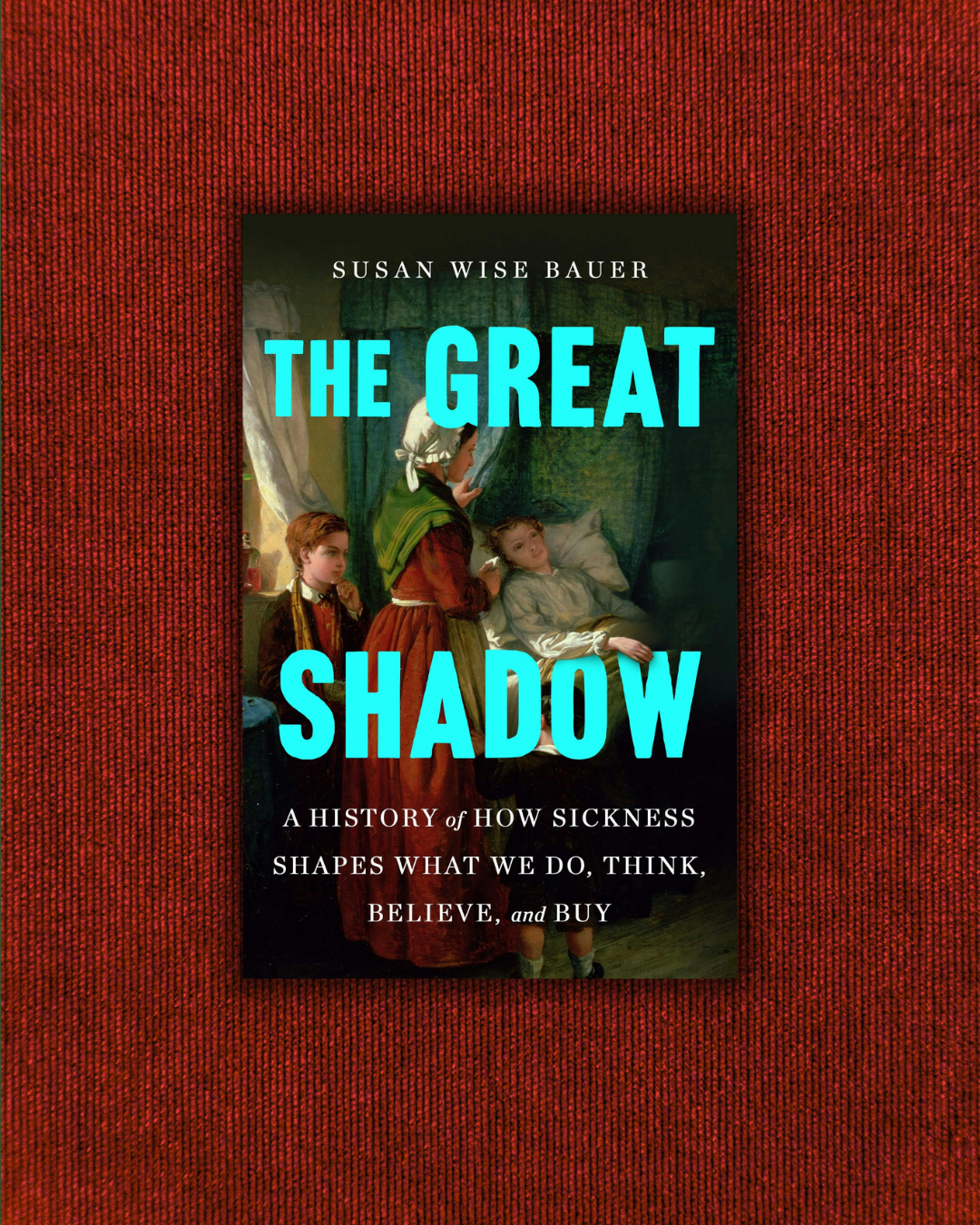
If you're in the Williamsburg (Virginia) area, come by this afternoon for my book talk at William & Mary's Swem Library! ... See MoreSee Less
This content isn't available right now
When this happens, it's usually because the owner only shared it with a small group of people, changed who can see it or it's been deleted.5 days ago
Loved your book! It's interesting how folks today remain divided between science and magic. I suppose it's so easy to believe in what's simple and it doesn't help when the powers that be, force science in times of crisis. I'm a scientist and so far have always chosen to vaccine-up. As one example that you pointed out, it becomes complicated in places such as mandated public education (K-12) when we must seek to protect our students who not only transmit the disease to other students but ultimately their families and friends. Thank you for getting both my synapses firing at the same time. It will be interesting to follow the current measles outbreaks to see what the government does.
Oh, I wish I lived nearby! Really enjoying the book!
I'll be the one in the back of the room, raising my hand and asking simple questions like, "what is love?" and "what's more fun to have--cholera, or dysentery?"
Congratulations
I hate missing your talk today! Congratulations on your new book and thanks for being one the the firsts to present in the Makenzie Theater at W&M Libraries
I wish! Already using some facts from it in class. Great for discussions with my Classical Greece class.
Here's a glimpse across the pond: to homeschooling in Britain, which once was uncommon, but has been growing in popularity.
**
Home educating has been rising sharply in England since the end of the pandemic lockdowns and mental health is being cited as the main reason. In 2024-25, 111,700 children in England were officially home schooled, up from 80,900 in 2022-23, an increase of 38 per cent. Of the 126,000 children educated at home during the autumn term last year, one in six cited mental health as the main cause, according to figures from the Department for Education (DfE).
Other causes include philosophical reasons (14 per cent), lifestyle (9 per cent) and dissatisfaction with schools such as bullying or special educational needs (SEN) provision (13 per cent). These numbers are believed to be an underestimate because home schooling does not have to be registered.
Tilly and her father said home schooling had allowed them “a softer approach” to learning. “I’m at work all day so I have to trust Tilly to get the work done,” said Pete, a plumber. She uses a mix of BBC Bitesize and Oak Academy, an online platform of free curriculum resources, and has some CGP GCSE revision books, which are widely used by schools. Her chosen subjects are “English, maths, science and art, but not the other ones because they just confuse me”... While home schooling is banned in countries including Germany, Greece, the Netherlands and Sweden, the UK has some of the most relaxed rules in Europe. They state that parents must provide a “full-time, efficient education” from age five, suitable for their child’s ability and needs. Interpretations of this can be subjective, because home education does not need to follow the national curriculum.
...To withdraw a child from mainstream education in England, a parent must inform their school, which then notifies the local authority. Permission to deregister is not needed from the school or local authority. There is no statutory duty for local authorities to monitor the quality of home education on a set schedule, nor do they have statutory powers to routinely enter homes or inspect.
**
This lack of regulation has been repeatedly questioned, most recently by an anonymous education official in the Times. You should most definitely take ANY anonymous report with a spoonful of salt, but I think this official makes a point worth considering:
**
For some families, home education is the right choice, but I am extremely worried that taking children out of school has become a trend. Home schooling used to be for religious reasons or based on lifestyle, like wanting to go travelling around the world in a campervan. Now, though, many parents see it as an easier option than fighting with their children about going to school every morning.
Most of the parents I speak to say their children need to leave school for mental health reasons, something we’re seeing across the country. Department for Education (DfE) data shows that, of the 126,000 children educated at home during the autumn term last year, one in six cited mental health as the main cause.
Emotionally based school avoidance — a term that has been used since the 1990s to describe anxiety-driven non-attendance — has increased significantly. The risk of fines only adds to the pressure. Persistent absence (defined as anything below 90 per cent school attendance) can lead to penalties of up to £2,500, or court orders.
By comparison, while it’s still a big decision, deciding to home school your child is a fairly easy process. If the child is in a mainstream school, parents must send the school a deregistration email or letter. Current legislation is vague: parents have to make sure their child receives a full-time education, but do not have to follow the national curriculum, leaving a lot to interpretation.
My experience does make me wonder: are students confusing the normal feelings of adolescence and a lack of resilience with poor mental health? There are very distinct differences between diagnosed anxiety and feeling anxious about certain situations, but many parents and children in elective home education (EHE) are approaching them as the same thing.
**
Sharing links to both pieces follow. I'd be interested in hearing your thoughts.
www.thetimes.com/uk/education/article/home-schooling-blackpool-mental-health-z0f36ph9q
www.thetimes.com/uk/education/article/home-schooling-uk-inspector-gx982bgd6 ... See MoreSee Less

It’s my job to check on 700 home-school pupils. What I see is alarming
www.thetimes.com
Some have nothing but a textbook. Others are left to doomscroll. A growing number of parents are gambling with their children’s futures1 week ago
My kids all told me their middle school schedules (in the US) were so full that they stopped drinking during the day in order to manage the lack of bathroom time. Maybe the schedule has something to do with the increased anxiety?
Both your articles are from The Times Susan Wise Bauer which generally has a centre-right, conservative political outlook. You would get a more balanced view if you included other sources. The authors are pretty negative about home education, and at worst, totally wrong in places. There is also a lot noticeably missing, for example, there is absolutely no mention of the problems in our school system that are driving the mental health crisis (as outlined by another commenter here). I would also say the examples of home educators these articles cite are deliberately chosen to cast us all in a negative light. For example, the plumber saying he works all day so his daughter educates herself using screens… This is not the norm! There are many home educators working very hard to provide a thorough education and making huge sacrifices in order to do so. The point about parents finding it easier to keep their children at home rather than deal with school resistance is ridiculous. It is never easier or cheaper to keep a child at home (as all parents know!). If schools were run effectively, our children would want to attend, or at least be able to attend without tears. I would also say there are further major issues going on here involving the affect of technology on our children’s mental health. Thankfully with the work of people like Jonathan Haidt governments are starting to wise up to this but the culture is lagging behind the research. Ultimately there are many reasons children are struggling in the UK, and it is vital we address the problems rather than blaming parents who invariably are trying to do the best for their children. I hope this helps you understand the situation a bit better over here!
Caro Giles’ new book, Unschooled, addresses neurodivergence and school avoidance in the UK head on. Beautifully written and a must read for people who think this is just parents blowing kids’ feeling out of proportion.
Not an assessment of the articles, but an observation as a Brit. I home educated my older son until he was 11 (18 months ago) and I noticed this change in the makeup of the home ed community - not that we were all religious or world schoolers before, that shows ignorance in my opinion. We were completely left alone by the authorities until right at the end, which was good because I've always been hideous at paperwork and the education he had was very far from school at home! He's thriving in a selective school now despite my apparent negligence, I'm very glad we didn't have intensive monitoring as I lack confidence it would focus on the really important things. My younger son has severe and complex needs (this is also why my eldest is in school now) and is completely without a school place from September onwards as his brilliant school can't carry on - they've battled the system and advocated fiercely for our family at enormous financial cost for 2.5 years and I have nothing but praise for them. It has been gently suggested to me by more than one professional that I consider home education (I can't, I'm barely surviving as it is). Other friends in the SEND community have been forced into home education despite it not being in their child's interests, just because the alternatives are too bad or they literally don't have any school place. I'm promised that my son will be provided with "at least 15 hours a week" of EOTAS provision if a school place for him can't be found, I'm not optimistic I'm afraid. No conclusions, I'm too tired for that.
Why are children so miserable at school? That should be the question. I am all for teaching young people to push through discomfort, and get exposure "therapy". But any kid who is mostly liking school doesn't choose to come home and stay home.
This quote: "many parents see it as an easier option than fighting their children about going to school every morning." This is hogwash, frankly. It would be far, far easier for me to drip my kids off at school every morning than to supervise their entire education. And no, I didn't choose to homeschool my children because of religious reasons or because I want to travel the world in a camper van. 🤦♀️ I chose it because I knew, as a public school teacher, the poor quality of government education and that I could give my kids a far superior education (and childhood) than public schools should. If one in six homeschoolers is citing mental health as a cause, perhaps what you SHOULD be doing is taking a good, hard look at what is going on in public schools that is causing this? Bullying or abuse? Overuse of technology (which is proven to be detrimental to mental health)? An overemphasis on test scores and grades rather than learning and progress? Developmentally inappropriate curriculum? Is there anything wrong with changing the narrative from "for some families, home education may be the right choice" to "for most families, home education is the best choice"? I would think a person with a strong voice in the homeschool world would be advocating for parent choice and decision making, not calling gains in the homeschool community "alarming". Very disappointing.
If you haven’t read Wintering, Katherine May talks about choosing to homeschool in England as well.
When I first started home educating ,in England ,in 2007, most home educating families we met , were thinking of putting their child back into the state school system around 14,so they could sit their GCSEs. If you look at current statistics from the DofE ,14 - 16 year olds are the most likely to be deregistered. The number of deregistrations start rising once they leave primary school. We see these parents arriving at home education support groups,not through choice. Nobody removes their child after 10 years of compulsory school,just as the finishing gate is in sight (GCSEs are sat at age 16) because they desperately wanted to home educate. Having met some of these parents, they are desperately trying to keep their child alive. Some have been off rolled,this is where the school has pushed for the child to be deregistered. Sometimes because of poor attendance. Sometimes because they will drag down the league tables. Often it is because of SEND. (The Timpson review found that having autism or ADHD had massive impact on how likely it was that a child would be expelled or removed from school.) There's a whole host of problems . Lack of Send provision. ECHPs have become hens teeth. With local authorities routinely denying all claims and waiting to see which parents are willing to take them to tribunal . The attendance policy , where 100% attendance is mandatory ,with fines and even prison for the parents ,if attendance drops. And league tables,where schools funding and teachers pay depends on children getting certain grades in their GCSEs. There's a current trend for zero tolerance.Ridicullous uniform regulations- children being sent home or put in isolation for having the wrong socks. But ultimately,this anonymous news report,is because MPs are playing ping pong with the house of lords and the government is trying to push through a massive piece of legislation called the Children's Wellbeing Schools Bill.
I have 5 children, 4 of whom were homeschooled for some or most of their education. The 4 who I homeschooled for some portion have all graduated from college and 2 have masters degrees. Besides homeschool, we also utilized multiple public and private schools. It did take a great deal of time and expertise on my part - which I enjoyed - but parental involvement and resources are critical. From all that experience, I do think it’s extremely hard to ever make broad blanket statements about whether public, private, or homeschool is “the best” situation for a child - because there is such diversity within all those categories. Each individual public, private, or home school can be excellent, terrible, or many shades in between. Which makes it pretty impossible to do studies or make broad generalizations because you are comparing baskets made up of a dizzying variety of fruit. Homeschooling does require far more resources of money, time and focus than many parents expect. It’s not for everyone - and I do get annoyed whenever anyone claims that homeschool is the best for everyone. Nothing is the best for everyone. And in many situations, the resources and support available in the public school system are essential for children living in unstable or resource deprived homes.
There is no doubt in my mind that homeschooling is a trend both in secular and Christian circles. It’s also true that many parents are ill equipped, especially when they start out (#WellTrainedMind #sanitysaver). I do take issue with the assumption that public school conditions children to be resilient and that that necessarily prepares them to be successful thinkers, writers, workers, leaders, etc. By that logic I could argue a sea world tank conditions an orca to be resilient, but we all know those poor creatures are not as happy or healthy as their wild friends. Still, I think it is really important to ask myself: to what extent am I trusting the Lord with my child’s mental health, overall health, and education? How am I allowing my child to encounter difficult situations and relationships and coming alongside or behind to help him navigate? Homeschooling shouldn’t be a shield. It should be an armory where the child can learn to expertly use different tools to thrive in the real world.
“My experience does make me wonder: are students confusing the normal feelings of adolescence and a lack of resilience with poor mental health? There are very distinct differences between diagnosed anxiety and feeling anxious about certain situations, but many parents and children in elective home education (EHE) are approaching them as the same thing.” The author poses this question. I would ask the author to also consider the flip side. Are educational institutions and their employees ignoring “poor mental health” with what they deem “normal feelings of adolescence and lack of resilience?” On the one hand we have parents maybe treating “normal feelings” with a little more recognition than some deem necessary, and choose to homeschool. And on the other, we have institutions possibly ignoring real mental health problems they deem normal. I feel, without any expertise, so grain of salt and all, that one outcome has far worse ramifications, and it’s not the home schoolers.
Home educator of almost 18 years in the UK here 🙋🏼♀️ Oldest three all in full time employment or on their way to uni, younger three all thriving. We home educate very much by choice. Not to follow a trend, not due to school refusal or neurodivergence, not due to school failing to meet their needs. We choose it, and we love it.
Maybe more people are just waking up to the knowledge that school is an outdated system that is way behind in what we know about society, mental health, development, wellbeing and knowledge, and that it was originally put in place because parents were put into the workforce outside of the home, and in order to train children to become workers themselves 😁😉 Just a thought! Also, deciding to home educate is an enormous decision. Many households have to entirely restructure their set up and finances. More often than not, one parent has to leave a career they have been working in to facilitate home education. The author of this article sites a family where the parents still work full time and leave the child at home to learn but as a home educator myself in a thriving community I have never witnessed or heard of this set up. I don’t think this is the norm by any stretch. Maybe a little less scaremongering and a little more support would be a great approach. And as previous commenters have mentioned, if this many children and families are jumping ship then maybe look at the ship itself to work out what they’re fleeing from 👌
I don't think any home educator would say its the easy option!!
It's not just EBSA. Its often to do with unmet SEN needs. EBSA is usually because of this. My eldest had EBSA due to his educational needs being misunderstood and/or not catered to because of the rigid structure of mainstream schools and classrooms. His mental health was struggling as a result. My youngest was 4 years behind in reading and therefor writing. He was unable to do most of the work in his class, he didn't have enough support and it was only once he fell behind this far when the idea of an ehcp was mentioned. Something that would take years to fight for and wouldn't be guaranteed (under the new send reform he definitely wouldn't get one). Since removing them from school my eldests mental health has improved and he's been able to focus on areas of strength and interest rather than a one size fits all. His nervous system is regulated. My youngest has gone up 2.5 years in reading age in 5 months because I've been able to adapt to his needs and spend time supporting him. Even for those children with EBSA who are not neurodivergent, if the mainstream school system had an overhaul that fully adapted to the needs of SEN, all of the the children would benefit. Theres money from the current government going into training for teaching staff but they need to supply funding for more teaching staff to implement this knowledge, and a change in classroom management and sizes. They need to do away with archaic punishment ethos and uniforms. They also need more SEND schools.
I am in the US but have several international friends . The article is not wrong . Homeschoolers are absolutely going to defend themselves without looking around . We are homeschoolers ourselves so this isn’t an anti homeschooling take . If we like it or not there is a trend of families pulling their kids out to be lazy or families not wanting to deal with basic life moments . This doesn’t mean everyone but it is happening a lot . It has actually been a huge topic in many circles . We are seeing a huge rise in children getting zero or limited education because the kids “don’t “ want to or parents didn’t realize you actually have to do alot more than turn on a computer . This can be true at the same time we need to talk about the change in school culture , mental health over all, and safety . Those things are also a huge issue that we need to talk about .
We have home-educated for 16 years in Australia and now in England. Most families I speak to in England are unregistered, so I imagine these numbers are not a true representation of the actual figures. Unlike where we were (in Tasmania), home education registration in England seems entirely punitive, leaving families with little incentive to bother. If you aren't a 'school leaver' then likely you would never register and simply hope the local authority never catch up with you. After two years, it seems highly likely they never will. 🤷♀️
The biggest growth in homeschooling I see is in families who fought long and hard to have IEPs properly implemented. We didn't withdraw from schools because we're anti public education. We support teachers. But we also recognize how under rescourced schools are and how stressed educators are. Overcrowded classrooms, high transient rates, and behavioral issues all contribute to anxiety and stress for everyone. Couple this with active shooter drills and the general stress level of, well, everyone and I'm surprised the numbers aren't higher.
It’s not a trend, it’s a revolution.
I taught in public and private schools in the U.S. for 14 years and never thought I’d homeschool. Well, times change and I stopped teaching in May 2024 to homeschool my sons and am LOVING the peace and freedom. Once I made a list of all of the pros it was a no brainer. Even if institutionalized schools fixed all the problems they can, I’d still choose to homeschool because some of these points below are impossible to do in institutionalized schools. I wouldn’t say homeschooling is easier than what I was doing before (teaching full-time and part-time with two young children [now 3]), but I enjoy it more since I love my children and spending time with them especially when they’re little- pouring into their education and curating a childhood worth remembering. After my third son was born last May, some asked how I homeschool with a baby. I used to teach 22 kindergarteners… I can handle 3 children. There’s been research showing that homeschooled children perform better overall academically and socially. Maybe that was a US study that the author doesn’t think applies or hasn’t read? Wonder what she would say to that. I say since homeschool parents are doing a better job leave us alone. Sure, there are a few bad ones, but there are bad teachers in institutionalized schools, too. Plus all the other negatives. List of pros- Small “class” sizes Better classroom management Personalized learning topics Easily modifying for different learning styles Lots of opportunities for movement Plenty of flexible seating options Moving through lessons faster or slower at the child’s pace Ability to switch curriculums Instilling family’s beliefs and values Better time efficiency leaving more time for play Essentially no bullying or negative peer pressure No active shooter drills More time outside- playing and learning Intentional and real-life socialization A flexible school and family schedule Getting to witness my children grow physically, academically, and spiritually Spending precious time with them while they’re little No walking in a line silently Pleasant, untimed lunches Less getting sick No high stakes testing Learning to mastery Knowing what your child is being fed More time with pets
First, trust that nobody's confusing daily panic attacks with normal experiences of adolescence. Also, if you are going to write on a subject do some research. "Homeschooling" and "Home educating" are two totally different things. Homeschooling is when the child's education is still in the hands of the local authority, but for whatever reason it has been decided by the LA that the only way to meet the needs of the child is for them to learn at home through either tutors or online schooling. Home education is 100% parent facilitated with zero funding from the LA and those children who have previously been in school have their progress monitored by way of annual reports to the LA. If this plumber's daughter is self-led in her learning her progress is the only criteria by which her learning should be judged. Self led learners show initiative, they frequently learn at greater depth because they have chosen the subject they are most receptive to at the time, and they must also show they are progressing in maths and English (the only subjects which are insisted upon) to meet the evaluation criteria of being in receipt of full time adequate and appropriate learning for age and ability. The reports must also indicate there are ample opportunities for socialisation, which doesn't have to take place within normal school hours, so dad working all day won't stop her from going to clubs at the weekend or in the evenings (like school children do). Also, Home educating parents do not HAVE to let you see them face to face, so you are either writing about specific cases where concerns exist to allow you to insist on visits, making your sample group biased, or you are writing about people who have shown you grace to overstep your legal remit and shown a horrific level of bias for someone in your position, for which you should be reported to your employer.
schooling does not equal education. are we EDUCATING our children? The answer can be yes, or no at either place (home or school). Parents don't need to be teachers in the same way that teachers ought not have to be parents. and yes, I'm a (graduated/retired) home educator. 4 grown and gone and happy with their childhood and education. They are doing things they love, and they know how to think for themselves. But I'm in the USA, so maybe I should have kept my thoughts to myself.
I was teaching in mainstream schools for over a decade and I can state with almost 100% certainty, based on my own observations, that a child's school refusal is less to do with poor resilience and more to do with the state of our schools. The anxiety that children are experiencing, in the most part, is proportionate to the environment they are entering. More parents are switching onto this and responding to their child's needs - seeing huge improvements in their mental.wellbeing (and therefore their ability to learn) almost immediately.
The school system in England is broken. It fails both the children and the teachers. I spent 12 years working in education, and last year I quit, and i took my children out to home educate them because of how bad the system now is. I refused to be a part of a system that damages children. Teachers are leaving in huge numbers and families are taking children out of school in huge numbers because the school system is so bad. The government don't like It, hence why there is such a big attack on home education in the mainstream media. Such as this article. This whole article is tosh. The person claims that that it is their job to check on families, yet they don't even know the correct terminology. I think that says a lot about their understanding of home education. In the UK it is called home education. Homeschool is where the children are still on roll at school and the school or local authority provide work for the child to do at home. Schools in the UK are broken. They fail our children and a lot of them aren't safe places. They can't support children with SEN, they destroy children and staffs mental health. So many of us are home educating because we want better for our children.
Here where I live parents are definitely doing it because it’s easier- easier than dealing with the schools, not the kids. In a city near me it has started to level out at almost half the children are homeschooled at this point. It’s very accepted and more parents are eyeing it after getting asked repeatedly for money, SA accusations against teachers, and kids struggling with test stress and bullying. If it’s anything like that in England, I can see why people are “trending” towards homeschooling.